Production Makeup: What Camera-Ready Actually Means
Production makeup is not glam done faster. It is a different job with a different client: the camera. The face has to hold up at 4K, match itself across eight hours and three setups, and never once become the reason a shot gets reset.
We have done this on commercials, broadcast, brand campaigns and content days for twenty years, in Chicago, Tampa Bay and Los Angeles. Here is what the work actually involves, and what to look for when you are hiring for it.
1. The lens sees texture, not beauty
Modern sensors resolve every pore, every dry patch and every powder particle. That changes what goes on the face. Thin layers, skin prep that does the heavy lifting, and product that photographs as skin rather than as coverage. Heavy powder reads as chalk. Shimmer that looks beautiful in a mirror can flare under a key light.
This is also where airbrush earns its place on set: it lays down a very thin, even base fast, which is why it has been standard on productions long before it reached weddings.
2. Continuity is half the job
A scene shot at 9am and 4pm has to cut together. That means reference photos of every look from the front and both sides, written notes on products and placement, and a kit organised so the same shade goes back on the same face after lunch. When a shoot goes to pickups a week later, those notes are the only reason the face matches.
3. You are working to a call sheet, not a mood
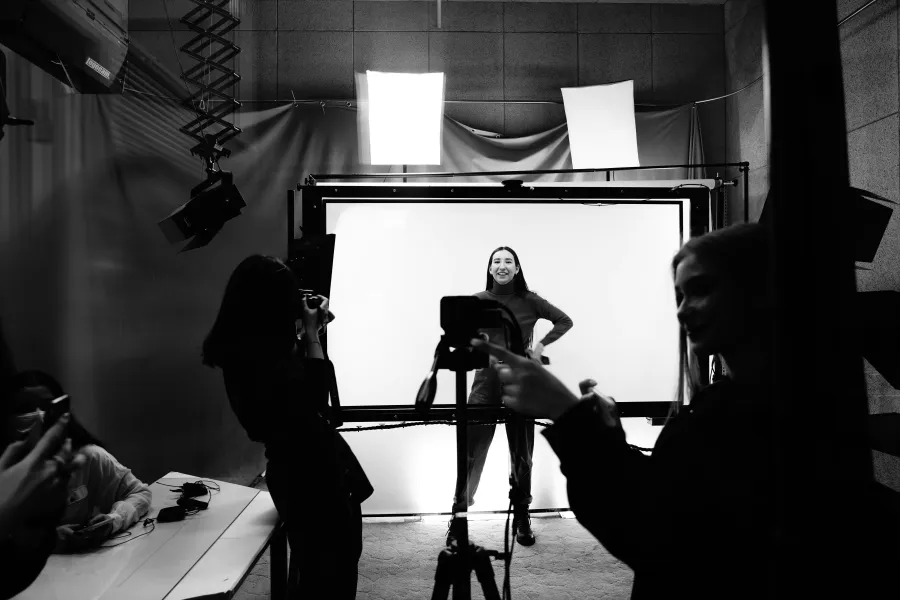
Call time, first shot, lunch, company move, wrap. An artist who works on productions reads the call sheet and works backward from the first shot, then holds that schedule across the day. If six people are in the 7am block and the first setup is at 8, the maths has to be done before anyone sits down.
It is the same discipline we bring to a corporate content day and to a large team headshot day, where the schedule is just as unforgiving.
4. Talent care is part of the craft
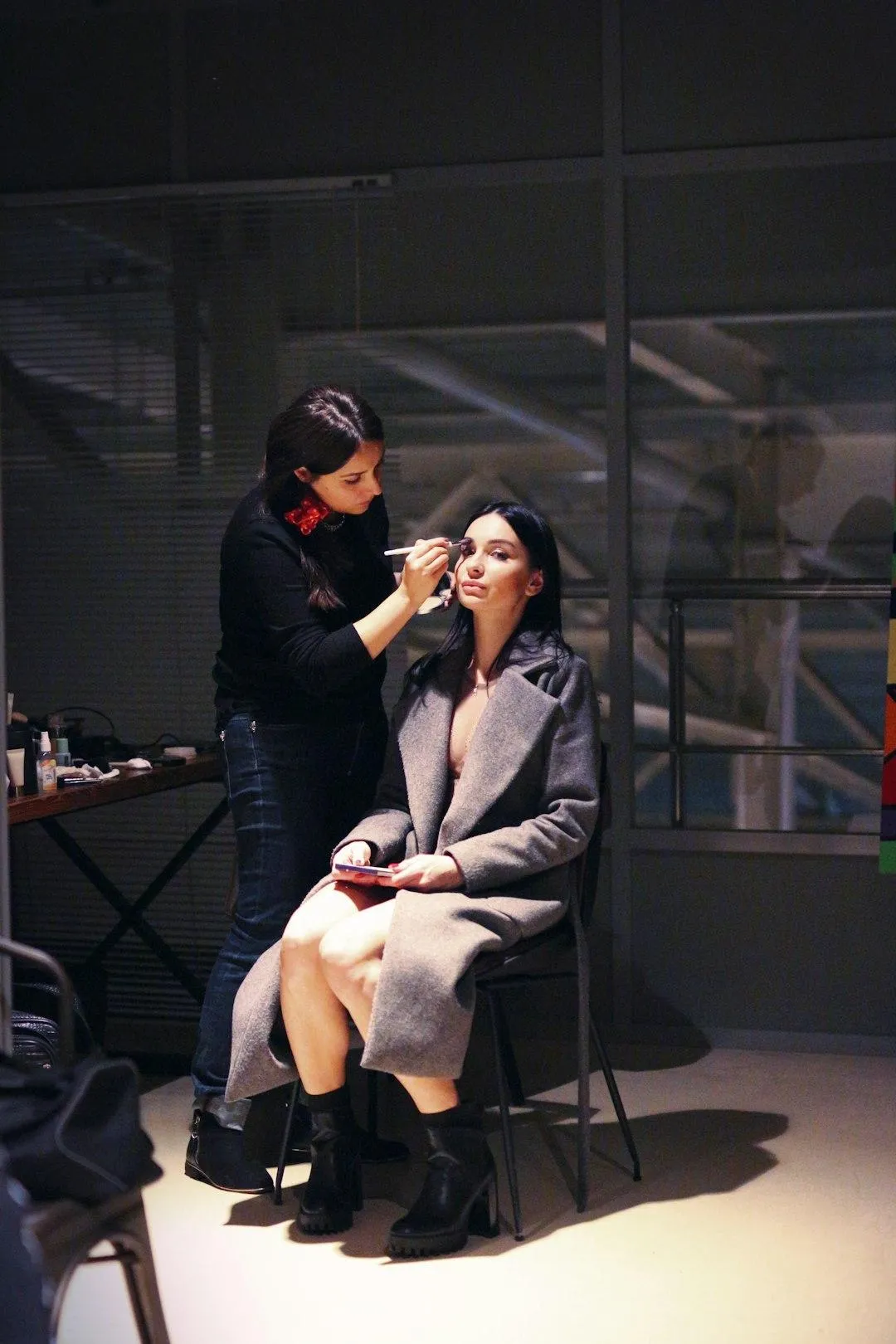
People on camera are often nervous, sometimes cold, occasionally being asked to do something uncomfortable. The chair is where they settle. An artist who is calm, clean and quick gives a director a better performance, which is a bigger contribution than any contour.
5. What to ask before you book
- Have you worked this format? Commercial, broadcast, editorial and content days all move differently.
- How do you handle continuity? The answer should include photos and notes, without prompting.
- What is in your kit for this? Ask about range for deep skin tones, men's grooming and beards.
- Can you crew up? One artist covers about four to six people an hour for touch-ups. Volume needs a team, not a hero.
- Who is actually showing up? Agencies that sub out quietly are the reason producers get surprised.
More on how we crew and what a day costs: productions and the commercial shoot budget guide.
See production hair, makeup and grooming →
Questions producers ask
What is production makeup?
Makeup built for the camera and the schedule: thin, even layers that read as skin at 4K, documented so the look matches across every setup and every shoot day, applied fast enough to hold a call sheet.
How is production makeup different from regular makeup?
Everyday or event makeup is judged by eye, once. Production makeup is judged by a lens, repeatedly, and has to survive lighting, hours and continuity between shots.
How many makeup artists do I need on set?
One artist covers roughly four to six people an hour for touch-ups once looks are set. Crew size follows your headcount and your first shot time, not the other way round.
Do you provide hair and grooming as well?
Yes. Most of our production artists are dual hair and makeup, and men's grooming is included rather than treated as an extra.
City Lights Beauty Agency has staffed hair, makeup and grooming on location since 2006 for productions, brands and private clients across Tampa Bay, Chicago and Los Angeles. Florida Talent Agency License TA1765.